Half Kibbeh, Half Burger: The New Food Language of Syrian-Lebanese American Kids
Grow up Syrian-Lebanese in America and you develop a very particular relationship with the school cafeteria. You're the kid whose lunch smells different. Whose mom packed something wrapped in flatbread when everyone else had Lunchables. Whose birthday cake might have orange blossom water in it when the other kids are getting Duncan Hines from a box.
For a lot of those kids — now adults, many of them cooking for their own families — that experience left a mark. Some of them spent years trying to blend in, quietly envying the kids with the "normal" lunches. Others wore it as a badge. Most landed somewhere complicated in between.
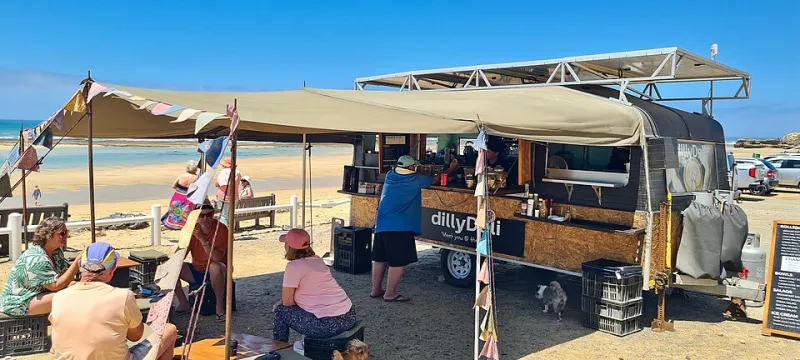
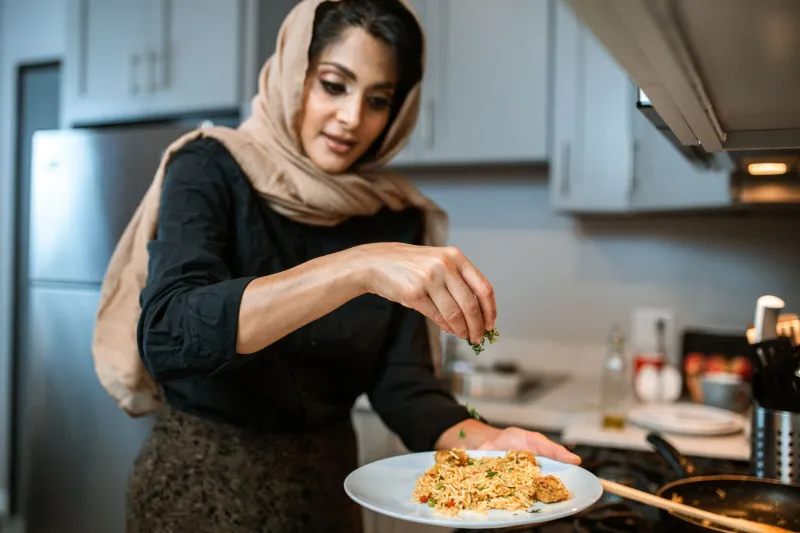
But here's what's interesting: a lot of those same people are now in kitchens, at farmers markets, behind food trucks, and on Instagram — and they're cooking something that didn't quite exist before. It's not their grandma's recipe, and it's not American food. It's something that only makes sense if you grew up exactly where they did: caught between two tables.
The Hyphen Has Its Own Flavor
There's a long tradition of immigrant food evolution in the US. Every wave of newcomers eventually produces a generation that remixes the old recipes. But what's happening in Syrian-Lebanese American kitchens right now feels particularly vivid — maybe because the heritage cuisine is so specific, so layered, and so deeply tied to family identity.
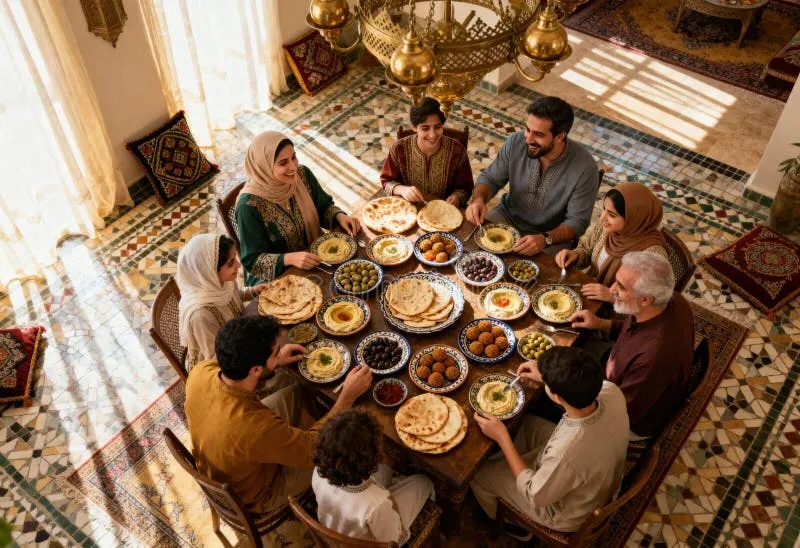
Syrian and Lebanese food isn't just food. It's hospitality, it's memory, it's the way grandmothers show love. Recipes aren't written down; they're demonstrated. Quantities are described in phrases like "enough" and "until it looks right." Handing that down across a cultural gap is already an act of translation — and the second generation is doing their own translation on top of that.
Yara Mansour, 29, runs a pop-up in Brooklyn she calls Marhaba Table. Her menu is genuinely hard to categorize. There's a muhammara-glazed chicken sandwich that sells out every week. She does a fattoush with pickled jalapeños that would make a purist nervous. And her knafeh cheesecake — a hybrid that started as a joke — has become the thing people come specifically for.
"I'm not trying to replace the original," she's quick to say. "I love the original. My teta's knafeh is better than anything I'll ever make. But I'm not my teta. I grew up in New Jersey. These are my ingredients too."
Not Fusion — Something More Personal
The word "fusion" tends to make diaspora cooks cringe, and for good reason. Fusion implies a deliberate, often trendy blending — two things combined for novelty. What Yara and others like her are doing feels less calculated than that. It's more like code-switching, the linguistic phenomenon where bilingual people shift between languages mid-conversation without thinking about it.
At the dinner table, that might look like: mom's lentil soup followed by frozen pizza. Hummus as a chip dip. Za'atar on scrambled eggs because that's just what you did. Over time, these combinations stop feeling like compromises and start feeling like home.
Alex Khoury, a 34-year-old food entrepreneur from Detroit, describes it this way: "I didn't grow up thinking 'I'm blending cultures.' I just grew up eating what was in the fridge. And what was in the fridge was sumac and hot sauce and leftover kafta and American cheese. That's just what we had."
Alex now sells a line of spice blends — rooted in Syrian pantry staples but marketed to a broad American audience — that he started partly out of frustration that his mom's spice mix wasn't available at any store he could find. His bestseller is a seven-spice blend with a slight smoky twist. "I adjusted it for American palates a little. Not because I'm ashamed of the original — because I want people to actually use it."
What Gets Kept, What Gets Changed
Not everything is up for remix, and the second generation knows the difference.
There are dishes that feel untouchable — not because they're sacred in a religious sense, but because they're too bound up in specific memories to mess with. For many Syrian-Lebanese Americans, that dish is kibbeh. Or their grandmother's specific version of mujaddara. Or the particular way someone's family made their Eid cookies.
"I will never put a spin on my grandma's mamoul," says Nour Sabbagh, a home baker in Los Angeles who documents her cooking on social media. "That recipe is hers. I make it exactly the way she showed me, and I'll teach my kids exactly the same way. That one stays."
But Nour's Instagram is also full of things like her Lebanese spiced olive oil chocolate chip cookies and a rose water panna cotta that she invented entirely on her own. "There's room for both," she says. "I don't think I have to choose."
That refusal to choose — to be fully assimilated or fully traditional — is maybe the defining attitude of this generation's food identity. They're not interested in the binary.
Food as a Way of Saying: We're Still Here
There's also something quietly political about all of this, even when it doesn't present itself that way.
For Syrian-Americans especially, cooking and sharing food has taken on extra weight in recent years. When the news cycle reduces Syria to crisis and conflict, a plate of food becomes an act of counter-narrative. It says: this culture is more than its tragedies. It's also this. This flavor, this smell, this thing my mom made on Sundays.
Yara Mansour puts it plainly: "When someone eats at my pop-up and says 'I didn't know Lebanese food was like this,' I feel like I've done something. Not just made dinner. Made them see us differently."
The second and third generation didn't choose to grow up between two cultures. But a lot of them have decided to make that in-between place into something worth eating.
The Table Keeps Expanding
What's emerging isn't a cuisine with a clean name yet. It's scattered across pop-ups and home kitchens and food trucks and social media accounts. It's personal and inconsistent and sometimes still figuring itself out — which is kind of the point.
These cooks aren't trying to codify anything. They're just feeding people from where they actually live, which happens to be somewhere between Damascus and Detroit, between Beirut and Brooklyn, between their grandmother's kitchen and their own.
And honestly? That food is really good.