Where the Coffee Never Stops: Syrian-Lebanese Qahwa Spots Are Quietly Reshaping American Community Life
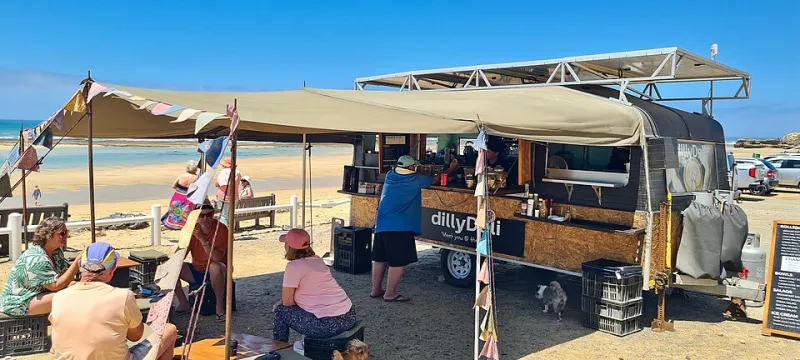
Photo: Bernard DUPONT, CC BY-SA 2.0, via Wikimedia Commons
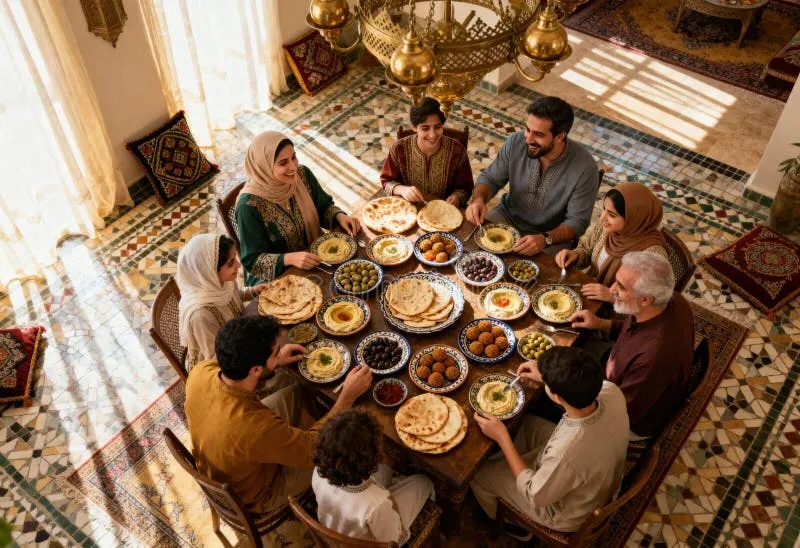
There's a particular kind of hush that falls over a table when the coffee arrives. Not the hurried quiet of someone checking their phone while a barista calls out a name — something slower than that. A settling. In Syrian and Lebanese tradition, coffee isn't a transaction. It's an invitation.
That spirit is finding new roots in American cities, where a growing number of Syrian-Lebanese coffee houses are carving out something rare: a space that belongs fully to the community that built it, while still leaving the door wide open for everyone else.
More Than a Menu
Walk into Bayt al-Qahwa in Dearborn, Michigan on a Tuesday afternoon and you'll find a retired schoolteacher from Aleppo playing tawleh with his neighbor, a table of college students doing homework in a mix of Arabic and English, and a woman in her thirties showing a friend how to read the dregs of a finjan cup. The coffee — thick, unsweetened, perfumed with cardamom and sometimes a whisper of rose water — is almost beside the point.
"People come in for the coffee but they stay for each other," says owner Mariam Khalil, who opened the shop in 2021 after years of watching her father host neighbors in their living room the same way. "My baba never had a coffee house. He just had a house where the coffee never stopped. I wanted to make that official."
Khalil's instinct taps into something deeply embedded in Syrian and Lebanese social culture. The maqha — the traditional coffee house — has historically been a place where news traveled, deals were made, poetry was recited, and community grievances were aired and resolved. It was, in the vocabulary of urban sociologists, a "third space": not home, not work, but the connective tissue between both.
In America, that connective tissue had been fraying. Community centers exist, mosques and churches anchor neighborhoods, and restaurants do their part. But a coffee house operates on a different frequency — more casual, more porous, with a lower barrier to entry and a longer invitation to simply stay.
The Language Stays Alive Here
One of the quieter gifts these spaces offer is linguistic. Arabic — specifically the Levantine dialects of Syria and Lebanon — has a complicated life in the US. Second- and third-generation community members often describe a gap: they understand a lot, speak a little, and feel a specific kind of embarrassment about that in-between place.
Coffee houses seem to ease that tension in ways that formal language classes don't always manage.
"Nobody's correcting you here," says Rami Asaad, a regular at a Syrian-run café in Brooklyn's Bay Ridge neighborhood. "You try out a word, people help you out, you laugh about it, and you move on. It's low stakes." Rami, who grew up in New Jersey speaking mostly English at home, says he's learned more conversational Shami dialect sitting at a corner table than he ever did from apps or textbooks.
Owners are noticing this pattern too. Several have started informal conversation gatherings — not classes exactly, more like structured hangs where heritage speakers and learners sit together over coffee and just talk. No curriculum, no homework. Just the kind of osmosis that only happens when you're comfortable enough to make mistakes.
Balancing Authenticity and Accessibility
Not every neighborhood has a large enough Syrian-Lebanese population to fill a dedicated cultural café. So some owners are threading a careful needle — staying true to the traditions that anchor these spaces while making them genuinely welcoming to non-community visitors.
In Houston, Nadia Frem runs a Lebanese café that doubles as a small gallery space for diaspora artists. Her menu features both traditional maamouls and a pretty solid cortado, because, as she puts it, "my neighbors are curious people and I want them to come in and ask questions."
The risk, Nadia acknowledges, is the drift toward performance — becoming a cultural exhibit rather than a cultural home. She's thought about it a lot. Her solution has been intentional: the programming and the community always come first. Events are announced in Arabic first, English second. The art on the walls represents Syrian and Lebanese voices, full stop. "If someone walks in and wants to understand, great. But this isn't built around explaining ourselves. It's built around being ourselves."
That distinction matters more than it might seem. There's a difference between a space that welcomes outsiders and a space designed for outsiders. The best of these coffee houses manage to be genuinely the former without sliding into the latter.
Intergenerational Glue
Maybe the most quietly radical thing happening inside these spaces is the conversation between generations. Syrian and Lebanese diaspora communities in the US span waves of immigration — families who arrived decades ago, refugees who came more recently, and everyone in between. The experiences are different enough that community solidarity can't always be taken for granted.
Coffee houses seem to soften those divides. An older man who left Damascus in the 1980s and a young woman who arrived after 2015 might not have the same story, but they share the same cardamom. They both know the sound of an oud coming from a phone speaker. They both know what it means when someone says ahlan wa sahlan and actually means it.
"I've had conversations in here I couldn't have had anywhere else," says Khalil. "Old timers and new arrivals, people who disagree about everything — but they sit together, they drink together. The coffee creates a kind of permission."
A Movement Still Finding Its Shape
This isn't a fully formed trend yet — it's more of a pulse. There are maybe a few dozen spaces across the US that truly fit this description, concentrated in cities like Dearborn, Brooklyn, Houston, Los Angeles, and Chicago. Many are small, operating on thin margins, held together by the owner's commitment as much as the business model.
But the appetite is clearly there. Community response to these spaces has been striking, with social media posts about new openings spreading rapidly through diaspora networks. People are hungry for exactly this kind of gathering point.
For Syrian-Lebanese Americans trying to hold onto something real — not a museum piece, not a performance, but a living, breathing culture — a good cup of qahwa and a place to sit with your people turns out to be a surprisingly powerful anchor.
The coffee, as always, is just the beginning.