Two Names, One Person: How Syrian-Lebanese Americans Decide What to Show the World
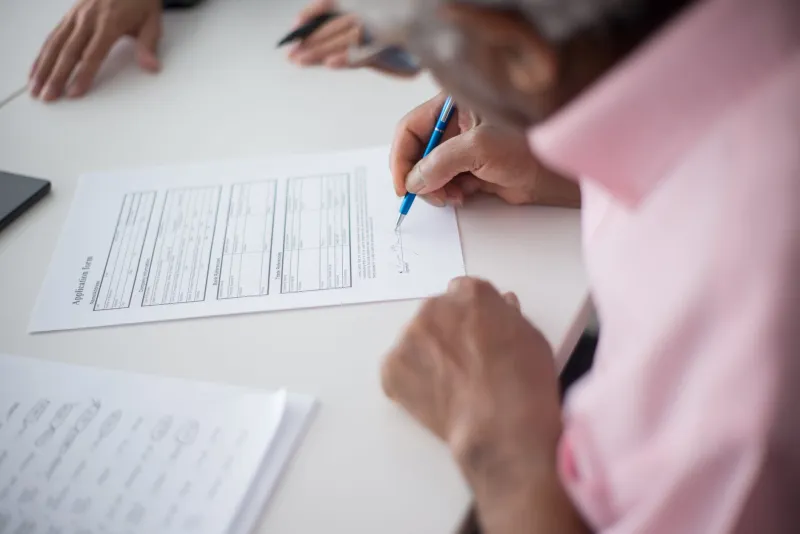
Here's a scenario that won't sound unfamiliar to a lot of people in this community: you're applying for a job. Your resume is strong. Your experience is solid. But your name — your full, actual, given-at-birth name — sits at the top of that document like a question mark. You've heard the studies. You know the data. And for just a moment, you wonder if "Mike" would get a callback faster than "Mikhail."
Some people dismiss that thought and hit submit. Others don't.
For Syrian-Lebanese Americans, identity is rarely a simple, singular thing. It's layered — shaped by family history, religion, immigration status, generation, and the particular corner of America you landed in. And in a country that has spent years cycling through complicated feelings about the Middle East, that layering comes with a constant low-level calculation: how much to show, to whom, and when.
The Resume Problem
Research on resume discrimination in the US is pretty well established at this point. Resumes with names that read as white and Anglo-Saxon receive significantly more callbacks than identical resumes with names that signal ethnic or racial minority status. For Arab Americans specifically — a group that doesn't fit neatly into the country's racial classification system — the math gets murkier, but the instinct to self-protect is real.
Layla Haddad, a marketing professional in Chicago, went by "Layla" on applications for years before she got her current job. "It's a name that could go either way," she says. "It's in an Eric Clapton song. Nobody's going to flag it." Her last name, Haddad, she kept. Dropping it entirely felt like a line she didn't want to cross. But she's thought about it.
"The thing that bothers me isn't that I made that choice," she says. "It's that I had to think about it at all."
Others in the community have made more explicit adjustments — anglicizing pronunciations, adopting nicknames for professional settings, or simply leading with a middle name that happens to sound less conspicuously Levantine. None of these decisions are made lightly, and almost no one makes them without some degree of internal conflict.
Religion as a Variable
For Syrian-Lebanese Americans, religion adds another dimension to the calculation. The community spans Christian denominations — Maronite, Greek Orthodox, Melkite — as well as Muslim and Druze backgrounds. In post-9/11 America, and again in the years following various waves of anti-Muslim sentiment, the visibility of religious identity has carried different stakes for different people.
Ali Chamoun, a civil engineer in Dallas, is Muslim and Syrian-American. He's watched colleagues make assumptions about him based on his name alone — assumptions that have run the full range from curiosity to wariness. "I've learned to read a room pretty fast," he says. "In some environments I'll mention my background openly in the first five minutes. In others, I'll let people get to know me first and then it comes up naturally."
That calibration — letting the relationship form before the label gets attached — is something a lot of Syrian-Lebanese Americans describe, regardless of religious background. It's not deception. It's sequencing. But it requires a level of social management that, as Ali points out, "my white colleagues never have to do."
On the flip side, some Syrian-Lebanese Christians have found that their faith identity gives them a kind of cultural camouflage that comes with its own complications. "People assume I'm Italian or Greek," says Marlene Nassar, a nurse in Phoenix whose family is from the Syrian coast. "When I tell them I'm Syrian, there's this pause. Like they're reconfiguring me." The reconfiguration, she notes, usually ends fine. But it's still a reconfiguration. She's still being sorted.
Inside the Community: Where the Math Reverses
What makes this particularly interesting is how completely the calculation flips in community spaces. The same person who keeps their background vague on a job application might be deeply, visibly, vocally Syrian-Lebanese in other contexts — at a cultural festival, at church or mosque, at a family gathering, or online in spaces specifically built for the diaspora.
In those spaces, the markers that get muted elsewhere become sources of pride and connection. The name that gets anglicized for a hiring manager is the name you introduce yourself with at a Syrian-Lebanese community dinner. The religious identity that gets softened in a professional context is the one you celebrate openly at Eid or Easter or Adha.
"I'm not two different people," says Haddad. "I'm the same person making different decisions about what's safe to show."
That word — safe — comes up more than you might expect. Safety isn't always about physical threat. Sometimes it's about economic safety, the safety of not having a door closed before you've had a chance to walk through it. And for Syrian-Lebanese Americans who've watched their community become a political flashpoint at various moments in recent American history, that sense of risk is grounded in something real.
The Generational Divide
Older generations of Syrian-Lebanese Americans — many of whom arrived during earlier waves of immigration in the late 19th and early 20th centuries, or in the decades following the Lebanese Civil War — often made assimilation decisions that were even more drastic. Names were changed wholesale at Ellis Island or shortly after. Arabic was deliberately not passed down. The goal was to become American as completely and quickly as possible, and the costs of that strategy are still being reckoned with by their descendants.
Younger generations are navigating a different cultural moment — one that, in many spaces, celebrates rather than penalizes ethnic identity. But the structural realities haven't fully caught up with the cultural ones. Discrimination in hiring, housing, and lending doesn't disappear because the broader culture has gotten more comfortable with diversity rhetoric.
"My parents told me to fit in," says Chamoun. "My kids are growing up being told to stand out. Somewhere in the middle is where I actually live."
The Cost of the Calculation
What rarely gets acknowledged in these conversations is the cumulative weight of constant identity management. Every decision to soften, omit, or sequence takes something out of you. It's not dramatic — no single moment breaks anyone. But the persistent low-grade effort of deciding which version of yourself to present adds up.
Therapists who work with Arab American communities have started naming this more explicitly: the psychological toll of code-switching identity, not just language, is real and deserves to be taken seriously.
"It's exhausting in a way that's hard to explain to people who've never had to do it," says Nassar. "Because on the outside you look fine. You got the job. You got the apartment. But you got it by leaving part of yourself in the car."
That image — leaving part of yourself in the car — is maybe the most honest summary of what a lot of Syrian-Lebanese Americans are doing every day. Getting where they need to go, but not always getting to bring everything with them.