Sound Like Home, Sound Like Here: The Quiet Negotiation Syrian-Lebanese Americans Make Every Day
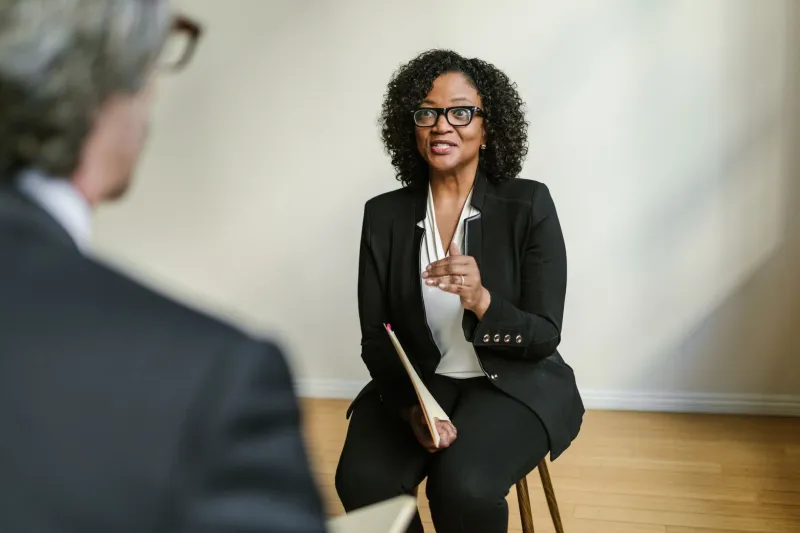
Rima Khoury remembers the exact moment she started paying attention to her voice. She was nineteen, interviewing for a front desk position at a hotel in suburban Michigan, and the hiring manager paused mid-conversation to ask, "Where are you from, originally?" She'd been born in Dearborn. Her parents were from Beirut. Her English was fluent, but something in her vowels apparently gave her away.
"I didn't get the job," she says, laughing in a way that makes it clear it stopped being funny a long time ago. "I don't know if it was the accent or something else. But after that, I started listening to myself differently."
For Syrian-Lebanese Americans, language is rarely just language. Whether it's Arabic spoken with a Syrian dialect that doesn't quite match what your Lebanese cousins use, English inflected with sounds that trace back to grandparents who never fully left the Levant, or a fluid hybrid that jumps between both in a single sentence — how you sound carries weight. Social weight. Professional weight. Sometimes, safety weight.
The Two Voices Problem
Code-switching — the practice of adjusting language, tone, or dialect depending on context — isn't unique to any one community. But for Syrian-Lebanese Americans, it often operates on multiple tracks at once. There's the shift from Arabic to English. Then there's the shift within English, modulating an accent that might read as foreign to some American ears. And then, for those who grew up in tight-knit diaspora communities, there's the reverse adjustment: walking back into an Arabic-speaking space and making sure you still sound like you belong there too.
Nadia Salloum, a high school English teacher in Houston, describes it as "vocal wardrobe changes."
"At school, I'm very measured. Very standard American English. I've worked at it," she says. "Then I pick up my kids from my mom's house and within thirty seconds I'm talking completely differently — faster, mixing in Arabic, using expressions my students would never understand. It's not fake in either place. It's just... different parts of me."
What gets complicated is when those two wardrobes feel like they're in conflict — when sounding "too ethnic" in one space costs you something, or when sounding "too American" in another makes you feel like a traitor to your own people.
The Professional Calculus
Studies on accent discrimination in the American workplace are uncomfortable reading. Research consistently shows that job candidates with non-native accents face bias in hiring, particularly in client-facing roles. For Syrian-Lebanese Americans who immigrated as adults or grew up speaking Arabic at home, navigating this reality is an ongoing exercise in self-editing.
George Abou-Hamdan, who runs a small accounting firm in Atlanta, came to the US from Damascus in his late twenties. His English is excellent — he'll tell you that himself with a grin — but his accent is unmistakably Levantine. He spent years in corporate environments where he felt the accent was being assessed alongside his credentials.
"People would finish my sentences for me, like they were helping," he says. "Or they'd slow down when they talked to me, which — I have an accent, I'm not hard of hearing." He eventually built his own client base, partly because he was tired of performing fluency for people who'd already decided what his voice meant about him.
For second-generation Syrian-Lebanese Americans, the dynamic is different but not necessarily easier. Many grew up with unaccented American English and still find themselves in a weird middle ground — neither perceived as fully "foreign" nor fully accepted as simply American, depending on who's doing the perceiving.
When Arabic Becomes the Pressure Point
The accent anxiety doesn't only flow in one direction. Plenty of Syrian-Lebanese Americans feel the sting not from American colleagues but from within the community itself — judged for Arabic that's too rusty, too American-inflected, or too mixed with English to pass muster among older relatives or more recent immigrants.
Sara Mikhail, a second-generation Lebanese-Syrian American in New Jersey, describes visiting family friends with her parents as a teenager and feeling humiliated when her Arabic stumbled.
"My parents would answer for me," she says. "Which was sweet, but also — I could feel the pity from the adults. Like I was broken. Like something had been lost." She's spent her adult years deliberately rebuilding her Arabic, not because she needs it for work, but because she needs it for herself. "When I speak Arabic now, even with an American accent, I feel more whole. I can't fully explain it."
That feeling — of language as a vessel for identity, not just communication — comes up again and again in conversations with Syrian-Lebanese Americans across generations.
Making Peace With the Hybrid
Not everyone is still wrestling with this. Some Syrian-Lebanese Americans have reached a kind of equilibrium, a place where the mixed-up, code-switched, accent-layered way they speak feels like an accurate reflection of who they actually are.
Karim Nassar, a marketing director in Los Angeles who grew up between Beirut and Boston, puts it bluntly: "I sound like everywhere I've been. I used to think that was a problem. Now I think it's just true."
His kids, he notes, have their own version of this — American English with the occasional Arabic word dropped in, zero self-consciousness about it. "They don't perform either thing. They just are both things. I'm kind of jealous of that."
There's something in that observation that points toward what younger generations of Syrian-Lebanese Americans might be modeling for the rest of us: a relationship with language that doesn't require choosing, that treats the hybrid not as a compromise but as its own complete thing.
The Accent Isn't Going Anywhere
For Rima Khoury, the woman who didn't get the hotel job at nineteen, the accent question eventually resolved itself — not by disappearing, but by mattering less to her.
"I still have it. I always will," she says. She now works in healthcare administration, manages a team, and has stopped monitoring her vowels. "If someone hears my accent and decides something about me before I've even finished a sentence, that's their limitation. I spent way too long trying to fix something that wasn't broken."
That's not a universal resolution — plenty of Syrian-Lebanese Americans are still in the middle of the negotiation, still doing the math on when to soften and when to let it all come through. But it might be the most honest place to land: the accent isn't a flaw to correct. It's a record of everywhere you've come from.