Roots With a Deed: Why Syrian-Lebanese Americans Are Buying Land Back Home
Roots With a Deed: Why Syrian-Lebanese Americans Are Buying Property Back Home
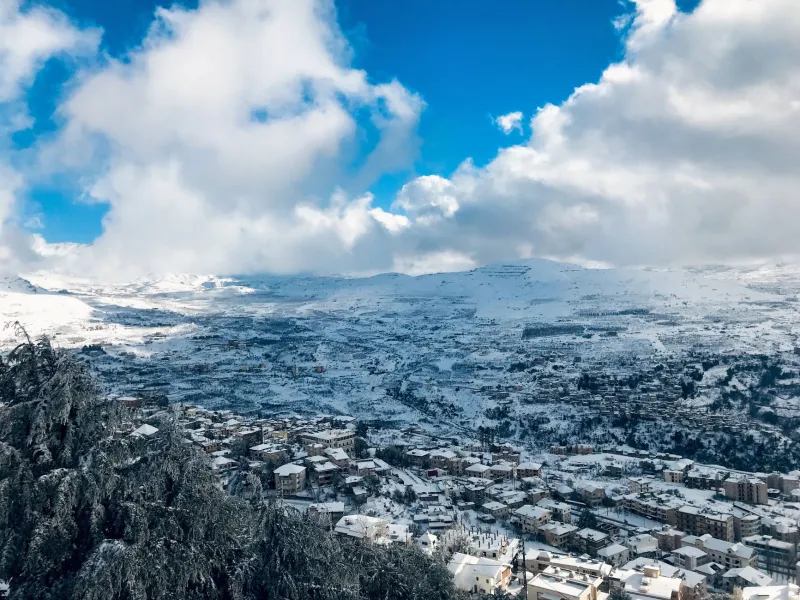
Samira Haddad had never actually lived in Lebanon. She grew up in Dearborn, Michigan, the daughter of parents who left Beirut in the late 1980s with two suitcases and not much else. But when her grandmother passed away a few years ago and left behind a small stone house in the Chouf mountains, Samira didn't hesitate. She flew out, sorted through the paperwork, and decided to keep it.
"People thought I was crazy," she laughs. "My friends here were like, 'What are you going to do with a house you visit once every two years?' But I just couldn't let it go. That house is the only physical thing that connects me to her."
Samira isn't alone. Across the Syrian-Lebanese diaspora in the United States, a quiet but meaningful trend is taking hold. Families who've been in America for one, two, even three generations are finding ways to hold onto — or in some cases acquire — property in Lebanon and Syria. The motivations are layered, the logistics are complicated, and the emotions are even more so. But for many, it comes down to something simple: land is memory you can touch.
More Than an Investment
It would be easy to frame this purely as a financial story. Lebanese real estate, despite the country's well-documented economic crises, still attracts diaspora dollars — partly because property ownership feels like a hedge against total disconnection, and partly because prices in certain areas have made purchases more accessible than they were a decade ago.
But talk to the people actually doing it, and the financial angle quickly takes a back seat.
Karim Nassar, a second-generation Syrian-American from Houston, purchased a modest apartment in Damascus's Old City several years before the civil war made such plans nearly impossible for most. He hasn't been back since the conflict escalated, but he pays someone locally to maintain it. "I know it sounds irrational," he admits. "But selling it feels like admitting something I'm not ready to admit. That we're never going back. That it's really over."
That sense of holding on — of refusing to let the homeland become purely abstract — runs through nearly every conversation in this space. For Syrian-Lebanese Americans, the concept of al-ard (the land) carries enormous cultural weight. It's woven into family stories, into the way grandparents talked about their villages, into the very specific pride people take in saying "we're from" a particular place, even when that place is an eight-hour flight and a world away.
The Legal and Financial Maze
Actually buying property in Lebanon or Syria as an American citizen is, to put it diplomatically, not simple.
Lebanon allows foreign nationals — including dual citizens — to own property, but the process involves multiple government ministries, currency complications, and a legal system that can move at a glacial pace even under the best conditions. Since the 2019 financial collapse, the situation has grown more complex. The Lebanese pound lost most of its value, banks have imposed severe restrictions on withdrawals, and transferring money in and out of the country requires creative navigation.
Real estate attorney Nadia Khalil, who works with diaspora clients from her practice in Los Angeles, says she's seen a steady stream of inquiries over the past few years. "People are coming to me with inherited properties they want to formalize, or they want to buy something and they don't know where to start. The paperwork alone can take years in Lebanon. And in Syria right now, for most people, it's essentially frozen — you can't safely conduct transactions in most areas."
For Lebanese property, many diaspora buyers are working around the banking crisis by conducting transactions in cash dollars — a workaround that's become normalized in Lebanon but carries its own risks. Others are leaning on trusted family members still living there to manage the process on the ground.
What Belonging Looks Like With a Key in Your Hand
Beyond the legal gymnastics, there's a deeper psychological dimension to all of this that doesn't get talked about enough.
For the children and grandchildren of immigrants, the homeland can feel like a place they belong to emotionally but not quite physically. They grew up hearing about it, eating its food, celebrating its holidays — but they've never paid rent there, never argued with a neighbor over parking, never experienced the ordinary friction of daily life in that place. Owning property changes that equation, even if just symbolically.
"When I have the keys to that apartment in my bag, I feel like I have a right to be there," says Lena Aziz, a third-generation Lebanese-American from Chicago who recently co-purchased a family property in the Bekaa Valley with her two siblings. "I'm not just a tourist visiting my heritage. I'm an owner. That matters to me in a way I can't fully explain."
For families with children born in the US, the property also becomes a tool for transmission — a reason to visit, a place where kids can spend summers, a tangible anchor for stories that might otherwise drift into abstraction.
Syria: A Harder Conversation
For Syrian-Americans, the conversation around property is heavier. The civil war displaced millions, destroyed entire neighborhoods, and created a legal and political situation around property ownership that human rights organizations have described as deliberately complex. The Syrian government has passed laws that critics say make it easier to strip displaced Syrians — particularly those abroad — of their properties.
Many Syrian-Americans are in a painful holding pattern: they have family land they haven't seen in over a decade, they don't know its current condition, and they're uncertain whether any claim they might make would be recognized or safe to pursue.
"I don't even know if our house is still standing," says one Syrian-American woman from New Jersey who asked not to be named. "My father talks about it every single day. We have the old deed. But what does that mean right now? Nobody knows."
For this community, the dream of owning or reclaiming land back home is inseparable from the larger, unresolved question of what return might ever look like.
Keeping the Thread
Despite the complications, the impulse to hold onto land — or find a way back to it — doesn't appear to be fading. If anything, as first-generation immigrants age and the generation that actually remembers the homeland begins to shrink, the urgency seems to grow.
For Samira Haddad, the stone house in the Chouf is still there. She's thinking about renovating it slowly, over several trips. Her kids have already been once. They complained about the lack of Wi-Fi and fell asleep on the porch under olive trees.
"That's good enough for me," she says. "They were there. They touched those walls. Now they know where we come from — not just as a story, but as a place you can put your hands on."
That's the thing about land. It doesn't let you forget.