Sacred Journeys, Layered Meanings: How Syrian-Lebanese Americans Are Making Pilgrimage Their Own
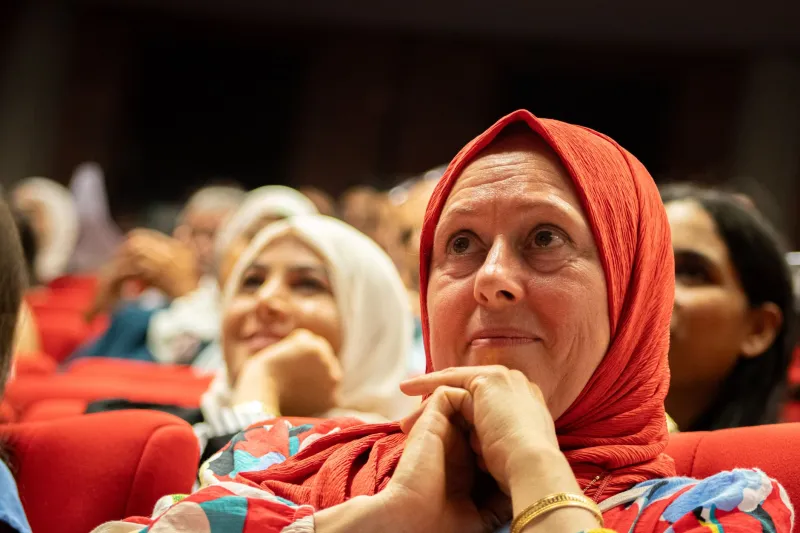
When Rania Khalil boarded her flight to Jeddah a few years back, she'd been planning the trip for nearly a decade. She had the savings, the paperwork, the carefully packed ihram garments folded into her carry-on. What she hadn't fully prepared for was crying at the first sight of the Kaaba — not just for the spiritual weight of the moment, but because her late father had stood in that same spot thirty years earlier and described it to her in Arabic over the phone from their home in Dearborn, Michigan. "I wasn't just doing Hajj," she said. "I was finishing something he started for me."
That layering — faith and family memory folded together into a single journey — is something a lot of Syrian-Lebanese Americans are quietly navigating. For a community that spans Muslim, Christian, and Druze traditions, the idea of pilgrimage means different things to different families. But across those differences, there's a shared pattern: these trips aren't just religious obligations or bucket-list experiences. They're becoming some of the most emotionally loaded moments in diaspora life.
Not One Pilgrimage, But Many
The Syrian-Lebanese American community doesn't have a single sacred destination. For Muslim families, Hajj and Umrah anchor the religious calendar, and completing the pilgrimage to Mecca carries enormous weight — both spiritually and socially. For Maronite, Greek Orthodox, and other Christian families, the Holy Land holds that same gravitational pull. Bethlehem, Nazareth, the Church of the Holy Sepulchre — these aren't just history-book places. They're destinations that grandparents described in hushed tones and parents promised to visit "one day."
And then there's a third category that doesn't always get named as pilgrimage but functions exactly like one: the trip back to the ancestral village. The drive up into the Lebanese mountains to find the church where great-grandparents were married. The walk through a Syrian town to locate the house that family photos were taken in front of, decades before anyone emigrated. These journeys blur the line between religious devotion and heritage recovery, and for many Syrian-Lebanese Americans, that blur is the whole point.
The Logistics of Going, From Here
Planning any of these trips from the U.S. comes with its own complications. For those completing Hajj, the process involves navigating a quota system, coordinating with licensed tour operators, and — for many first-timers — figuring out how to take weeks off work in a country where that kind of extended leave isn't culturally standard. Mosques in places like Houston, Chicago, and the greater Detroit area have become informal clearinghouses for this information, connecting newer pilgrims with community members who've made the journey before.
For Christian families visiting the Holy Land, the political realities of the region add a different layer of complexity. Navigating checkpoints, understanding which sites are accessible and under what conditions, deciding whether to book through a church group or go independently — these aren't small decisions. Many families opt for organized diocesan trips, which offer structure and a sense of community but can also feel less personal than going on your own terms.
And for those traveling to Syria or Lebanon specifically, the calculus has shifted dramatically over the past decade. The Syrian civil war displaced millions and made large swaths of the country inaccessible or dangerous. Families who had once imagined walking their American-born children through ancestral hometowns have had to reckon with the fact that some of those places no longer exist in the form they remembered — or exist at all.
When the Journey Becomes a Conversation
What's striking about how Syrian-Lebanese Americans talk about these trips is how often the experience reshapes family dynamics in ways nobody fully anticipated. Parents who complete Hajj alongside adult children describe a kind of equalizing effect — the pilgrimage strips away the usual hierarchy and places everyone in the same state of spiritual vulnerability. Children who accompany elderly parents to village churches in Lebanon or Syria often find themselves suddenly understanding things about their family that years of dinner-table stories never quite conveyed.
Nadia Frem, who grew up in New Jersey and traveled to Lebanon with her mother in her late twenties, described standing in front of a centuries-old Maronite church in the Chouf as the moment she stopped feeling like an outsider to her own heritage. "My mom just started naming people," she said. "This cousin's grandfather. That family's land. She knew every stone. And I realized — I'm not visiting history. I'm visiting her memory."
That shift in perspective — from tourist to witness — is something a lot of diaspora travelers describe. The journey changes what home means, even for people who've never technically lived in those places.
Building New Rituals Around Old Ones
Some Syrian-Lebanese American families are actively creating new traditions around these pilgrimages that blend religious observance with diaspora-specific meaning. Before a Hajj departure, extended family gatherings have become a kind of send-off ritual — communal meals, prayers, the exchange of messages to carry to Mecca on behalf of those who can't go. When the pilgrim returns, the homecoming celebration can feel as significant as the journey itself.
For Christian families, Holy Land trips are increasingly being structured around milestone moments — a son's confirmation, a grandparent's final wish, a couple's anniversary. The pilgrimage becomes a container for family meaning that extends well beyond the religious itinerary.
Younger Syrian-Lebanese Americans are also bringing their own sensibilities to the experience. They document more, share more, and ask harder questions about what these places mean in a contemporary political context. They're less likely to treat the journey as purely devotional and more likely to hold the complexity — the beauty and the grief, the spiritual and the historical — all at once.
Faith That Travels With You
There's an old idea in both Islamic and Christian traditions that the journey itself is part of the spiritual practice — that the act of traveling toward something sacred changes you in ways that arriving alone cannot. For Syrian-Lebanese Americans, that idea resonates in a particular way. The diaspora experience is already a kind of perpetual in-between, a life lived at the intersection of where your family came from and where you were born and raised.
Pilgrimage, in that context, doesn't resolve the tension. It honors it. It says: I carry both of these things, and I'm going somewhere to hold them up to the light.
Rania Khalil put it simply when she got back from Hajj. "I came home to Michigan feeling more Syrian, more Muslim, and more American than I ever had before. I didn't expect all three at the same time. But that's exactly what happened."
Maybe that's the most Syrian-Lebanese thing about it.